Waldorf, Maryland
Bathroom Renovation in Waldorf, MD
Bathroom Renovation in Waldorf, Maryland, built waterproofing first and priced in a written scope before work begins.
Waldorf, Maryland
Bathroom Renovation in Waldorf, Maryland, built waterproofing first and priced in a written scope before work begins.
Not every tired bathroom needs to be torn down to the studs. In St. Charles, where thousands of homes were built with sound layouts and materials that have aged out, a renovation keeps the room's bones and renews everything you see and touch. The tub stays where it is, the toilet stays where it is, and the bathroom comes back looking and working like new.
The test is honest: if the layout works and the plumbing sits where you want it, renovation is the smart scope. If you are fighting the floor plan, that is a remodel. We will tell you which one your bathroom is before we quote either.
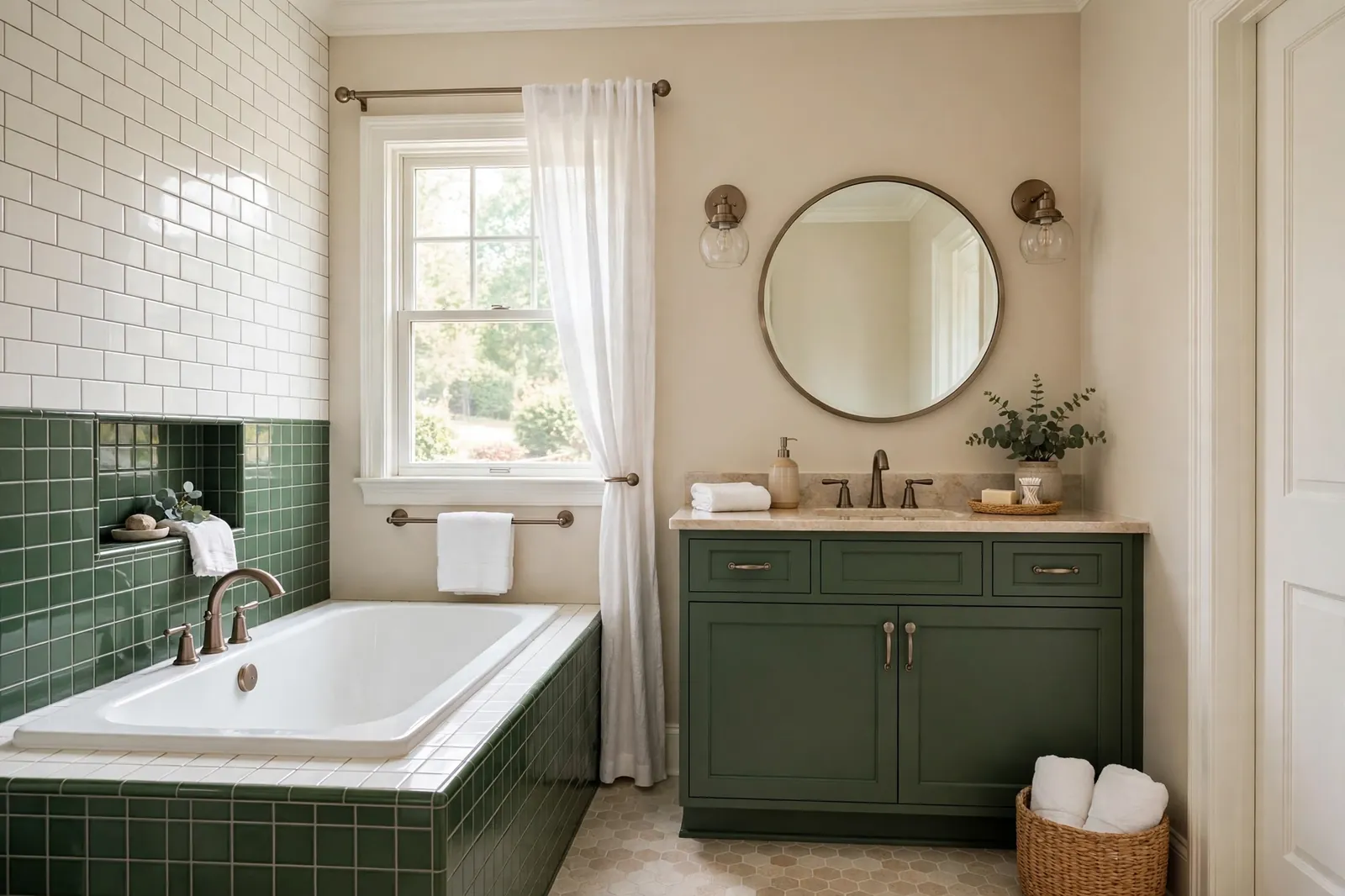
A renovation renews surfaces and fixtures in their existing positions. Out come the dated tile surround, the worn vanity, the dripping faucet, and the rattling exhaust fan. In go a rebuilt tile surround over proper backer and waterproofing, a new vanity and top, fresh fixtures, new flooring, modern lighting, and paint that can handle bathroom humidity.
What does not move is the plumbing. Keeping the tub, toilet, and vanity in place means drains, supply lines, and walls stay put, which is why a renovation finishes faster and costs less than a full remodel. Many St. Charles renovations also fix the two hidden problems we constantly find in these homes: fans vented into the attic instead of outdoors, and tub surrounds tiled over drywall with no waterproofing.
We protect floors and hallways first, then strip the room down to solid material. Before anything goes in, we inspect what the old surfaces were hiding: subfloor around the tub, the drain connection, and wall framing behind the surround. Small rot found now is a repair. The same rot found in five years is a remodel.
Rebuild follows a fixed order. Backer board and waterproofing, then tile, flooring, vanity, fixtures, lighting, and paint. Because nothing structural changes, Charles County generally does not require permits for cosmetic swaps, while any project that does change plumbing or wiring gets permitted and inspected.
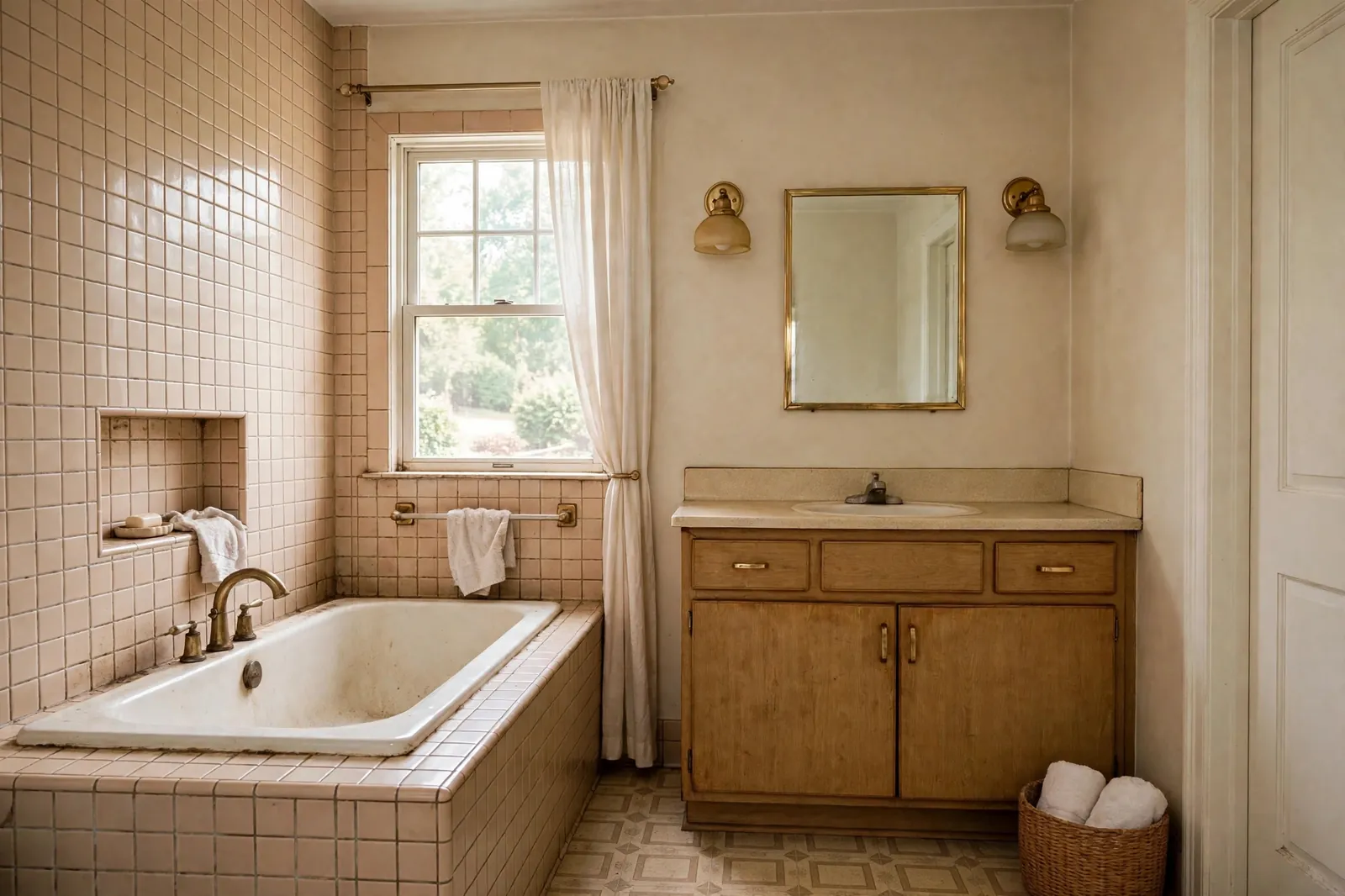
A St. Charles hall bathroom still wore its 1990s build: a fiberglass surround gone dull, a vanity with peeling edges, and a fan that vented straight into the attic. We kept the layout and the cast iron tub, rebuilt the surround in tile over waterproofed backer, set a new vanity with a stone top, and replaced every fixture. The new fan exhausts outdoors through the roof, ending years of attic moisture.
A typical Waldorf bathroom renovation runs $7,300 to $16,500, and the local market average lands near $11,470. Tile selection, vanity size and top material, and fixture finishes move the number most. So does what we find underneath: a surround hiding drywall instead of backer, or a subfloor softened around the tub drain, adds repair work priced openly before we cover it up.
We are a licensed and bonded contractor working under MHIC license 155221, and we are veteran friendly. That license covers renovations and remodels alike, and our advice follows the same standard: if your bathroom can be renewed honestly for less, we will scope a renovation and tell you what it will not fix, in writing. Homeowners remember that honesty longer than any tile.
A renovation renews the surfaces and fixtures while the layout and plumbing locations stay the same. A remodel changes the room: moving walls, relocating a shower or toilet, or expanding the footprint. Renovation is the right tool when the floor plan works for your household.
Often, yes. A cast iron tub in good condition is worth keeping, and most acrylic and steel tubs can stay. We inspect the tub's finish, check for flex and cracks, and look at the subfloor and drain around it before recommending.
Most Waldorf renovations fall between $7,300 and $16,500, with the market average around $11,470. Keeping the layout holds the figure down; premium tile, a larger vanity with a stone top, and repairs to hidden water damage push it toward the upper end.
Most renovations finish in 1 to 3 weeks, with a typical hall bath landing near two weeks. Tile work sets the pace: surround demolition, backer and waterproofing, setting, and grouting each need a day.
Cosmetic replacements generally do not. Swapping tile, fixtures, a vanity, and lighting is surface work. The moment a project relocates plumbing or alters wiring, permits and inspections apply, and we handle them as part of the scope.
We stop and show you before covering anything. Damage around tubs usually means a softened subfloor section or framing that picked up years of slow leaks. We price the repair, document it with photos, and only proceed once you approve it.
Tell us about your bathroom and the work you are picturing. We read every request that comes in and respond with the next steps, starting with a consultation and a written scope with a fixed price for the work you choose.
Licensed and bonded · MHIC license 155221 · Veteran friendly. Prefer to talk it through first? Send the form and we will call you back at the number you give us.